


The Phygital Approach: Reinventing the customer experience in the eCommerce Industry

The Phygital Approach: Reinventing the customer experience in the eCommerce Industry

  • June 14, 2023

The pandemic has brought about a lot of changes and adaptations which have efficaciously changed the way people shop and experience brands. Adjusting to this mad rush of brands emerging online and everyone chasing ‘phygital’ and ‘omnichannel’ has unlocked a new horizon of opportunities for D2C brands; as customers take charge to demand and dictate the pathways of the brands. This ‘new-normal’ has been grueling for brands to adjust to and has tested the D2C readiness so much so that even legacy brands in India are taking the D2C path and trying to provide an effective phygital experience. So, the question arises, what exactly is phygital and how can you use this approach to reinvent the customer experience?

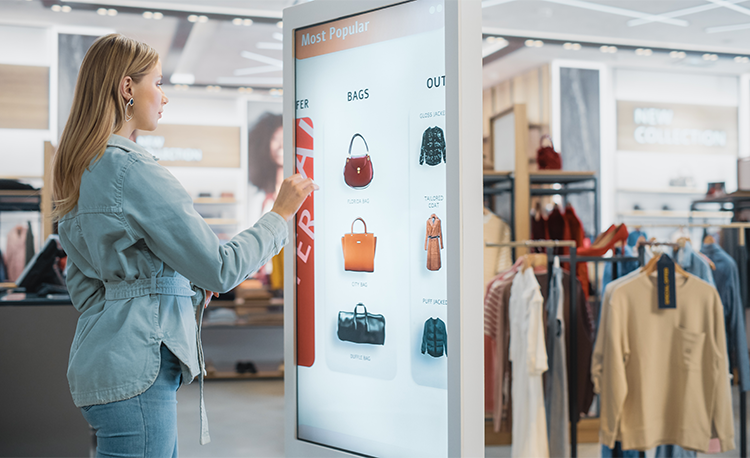
Phygital is an amalgamation of two words – physical and digital. It is redefining the eCommerce industry landscape by marrying the online convenience and penetration of the D2C industry with the human interaction, look and feel of the physical store. Basically, Phygital blends online and offline purchasing to create a seamless customer experience (CX). Brands have been very proactive in setting up experience centers and specialty stores that solely exist to give the consumers the missing element of the brand-human interaction. FabIndia, Wagh Bakri Chai, OnePlus, Kent, Urban Ladder etc. are a few of the leading brands that are operating their experience centers in a wide variety of locations. Phygital gives a double edge to your brand as discovery is accelerated through the internet but the way your customer accesses your product becomes multi-fold.

Phygital is revamping the future of the eCommerce industry to deliver enhanced customer experiences. To enable this, a multitude of forces are driving the increased adoption of the Phygital approach in the industry.

Dimensions of a Phygital approach

Instead of the funnel model, phygital compliments the flywheel marketing method and puts the customer at the center of it all. From attraction to engagement and delighting the customer, marketers use this new approach to deliver their products and offerings while communicating to the customer their story – why they exist and what they are solving.

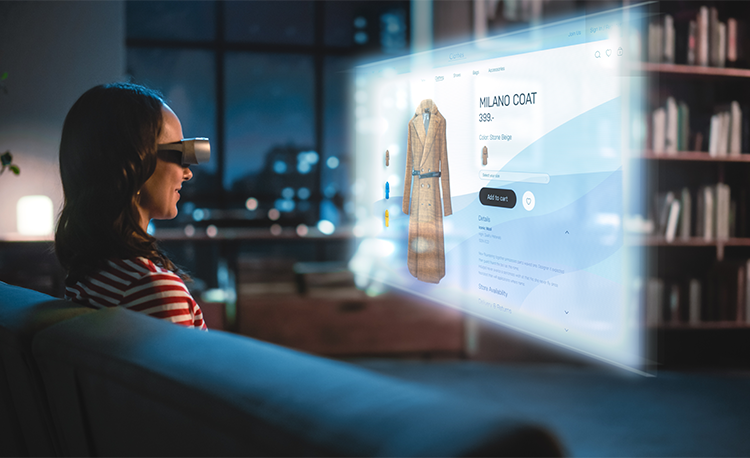
Let’s explore the multiple functions of a brand and how different technologies are used to make them phygital. For Sales – chatbots, machine learning; for Product – virtual try-ons, biometric fittings; for Customer Experience – virtual stores, AI-assisted shopping; for Catalogue – omnichannel catalog, demand sensing; for Marketing – omnichannel lead capture, Targeted digital campaigns; and for Stores – proximity marketing, Digital payments.

Advocating increased Personalisation 

Phygital is not just integrating online and offline shopping channels, it is about providing a seamless purchasing experience to customers. Personalization is the key to boosting conversions through retargeting in which you can get your customer to become a repeat customer in a more organic way. Since you’ve mapped their journey online and offline, the content for your customer can be highly personalized.

Unification of promotions and seamlessness of loyalty redemption, across online and offline, envelops the customer for an absolute phygital experience. For post-order personalization, brands must ensure that the support desk can tell a customer’s order history, regardless of the channel they used to make the purchase. Ultimately, this can only happen from your point of sale and not the marketplace as you don’t get that much data. If you can harness the data and the AI Insights you can boost your customer lifetime value (CLV).

A big word in phygital is convenience, many people don’t realize it’s not a tech change or a norm. Ultimately, the shopper or the user will shift towards convenience. As per the reports, around 55% of shoppers research online first and then go buy the shortlisted products offline, contributing to USD 70 Bn of offline sales influenced by online consumer research.

Changing consumer behavior and demands

A major paradigm shift in the buying behavior of consumers was seen during the pandemic where even people from tier-2 and 3 cities came online to start shopping for essentials. Our studies at GreenHonchos point towards the experimentative nature and the greater order volumes of tier-2 and 3 markets. In the personal care and beauty segment, the AOVs are higher in tier-2 cities compared to tier-1 cities, similarly, this segment has shown 143% growth in the order value and 137% growth in the GMV in 2021. Tier-2 and 3 cities have had a massive 85% and 75% growth in emerging segments online, respectively.

Local to global access

Many established local players are expanding their geographical footprint from tier-2 and 3 cities to the international markets. During the pandemic, the concepts of dark stores and cloud kitchens have allowed brands to look beyond the local confines and extend their reach to a larger consumer base. This way, the brand can also perform localized studies to discover new potential offline markets in a post-pandemic world and capitalize on growth based on real-life evidence. Thus making it easier for D2C brands to adopt hyperlocal delivery channels and penetrate rural and remote areas. The benefits of extended access are enticing many retailers to go Phygital.

Leveraging the omnichannel approach

By going omnichannel, brands can make sure they are providing the same experience on all their channels, be it on their D2C website, on marketplaces, or offline. The omnichannel approach is redefining the customer experience since the customer can order online, pick it up offline, get grievances done on a call or text, and all of this is done online and offline, across channels in tandem. By leveraging the omnichannel approach brands can progress towards quick commerce since they’d be able to communicate inventory intelligence and logistics across different stores and warehouses.

Cost-effective retailing model

One of the most compelling arguments in favor of adopting a Phygital model is its cost-effectiveness. The Phygital retail model enables existing store owners to increase their customer reach by offering a digital store without incurring huge expansion costs. Similarly, D2C players can set up a small store or partner with local businesses without investing a substantial amount in a full-fledged store. This enables them to boost their last-mile reach to the customers economically.

Enhanced customer experience

As the pandemic transforms customer behaviors and aspirations, companies are looking at innovative and unconventional means of catering to their unique needs. A phygital offering increases customer convenience as they can shop whenever and wherever they like. User-friendly and easy-to-navigate online channels along with the in-store experience and interaction enhance customer experience.

Making Business Impact

During the monthly reviews with leading footwear listed brand with one of the largest presences pan-India (Liberty), the GreenHonchos team saw an emergence from a region in South India (Telangana) that kept rising the ranks, more organically than paid push, amongst the usual regions of high sale. That’s where the metrics like repeat customer purchases, AOVs, and non-discounted sales showed the strength of the location in terms of brand recall and the brand did not have enough offline presence. After consulting with GreenHonchos, the brand took a conscious and data-backed approach through its D2C analytics and the store turned profitable within the third month itself. Which is a record in terms of net profit that doesn’t happen often.

Active SKUs
0
Annual Visitors
0 MN+
Growth in 3 years
0 X
Orders per annum
0 K+
Annual Revenue
0 MN+
Reduction in returns
0 %
Active SKUs
0
Orders per annum
0 K+
Annual Visitors
0 MN+
Annual revenue
0 MN+
Growth in 3 years
0 X
Reduction in returns
0 %

What is more testament to the emergence of phygital than the huge growth in Quick Commerce which keeps the actual Kirana or the dark store at the center of its supply chain for fulfillment, whereas the CX is managed online between the customer and the business app.

Final thoughts

As businesses across the globe navigate through the unique challenges posed by the aftermath of the Covid-19 pandemic, embracing innovation can help them traverse uncertainties. The phygital transition can potentially help retailers in not only diversifying their offerings but also in expanding their customer reach and network.

Phygital is emerging as one of the key concepts in the eCommerce space, paving the way for improved Customer Experience and adding the parameter of ‘look and feel’ to the eCommerce Space. For brands to deploy such techniques, they need a growth partner that can recognize the potential of these emerging technologies and implement them, unlocking new areas of growth and opportunities for the brand. GreenHonchos can prove to be such a growth partner for brands. Helping kickstart, execute and manage the growth of over 200 leading D2C brands, GreenHonchos is a leading full-stack enabler. GreenHonchos – a Full-Stack D2C enabler offers services like growth marketing, eCommerce digital marketing, marketplace management, social media marketing, and much more! For more valuable insights on eCommerce marketing and D2C growth strategies, follow us on LinkedIn, Facebook, Instagram and Twitter or visit our website to know more about our services.

Continue Reading
What is the Marketplace model of eCommerce and how to leverage it for scale?

What is the Marketplace model of eCommerce and how to leverage it for scale?

  • June 24, 2022

There is no denying the fact that marketplaces have been the biggest driving forces in establishing eCommerce on a global scale since the early 2000s, with Amazon being at the forefront of this drive. Amazon came out in the late 90s as an online bookstore marketplace and now has taken the world by storm by being the largest online marketplace. India witnessed an eCommerce revolution at the beginning of the second decade of the 21st century with the entrance of Amazon, Flipkart, Myntra, Jabong and others making way for the migration of offline consumers to online marketplaces. The biggest challenge for this was the distrust of the Indian consumer of the Internet and its commodities.

Marketplaces initially suffered in India due to this. The concepts of returns and exchanges of products were fairly alien across the western marketplaces and the consumers were agreeable with that. The Indian consumer, on the other hand, is very used to getting returns and exchanges done seamlessly offline and is more of a hands-on trying out person. To solve this, marketplaces in India revolutionised the online consumer’s shopping experience, providing Cash on Delivery options and a robust no questions asked exchange/returns process.  Powered by heavy marketing campaigns, Amazon and Myntra championed the trust of the consumers and made way for penetration in not only the Tier-I cities but also the bigger markets in Tier-II cities.

In September of 2016, the launch of Reliance Jio paved the way for accelerated internet usage. Disrupting the market with zero data charges and then moving towards bare minimum charges solidified India’s tech dependency. It was then that the penetration happened in the Tier – II & III cities the most. Consumers from these markets were experimentative, and bolstered by their belief in the exchanges and return policies, they stormed the marketplaces to make their purchases.


Now we stand in 2022, where everyday small purchases like food, groceries and FMCG products are offered through instant delivery reliant models like Blinkit, Swiggy Instamart, Zepto etc. As for the other categories like Fashion & Lifestyle, Beauty & Personal care, CPG, Pet Care, Baby Care, Home & Homeware etc. shoppers are frequenting marketplaces as well as the brand’s D2C website for making a purchase. The mass digital proliferation, cheap data plans, and flexible exchanges and returns policy of marketplaces has made way for more and more buyers to shop confidently online for everyday products.

Where the marketplace stands out for brand owners and marketers is the initial push in terms of brand reach, engagement and conversions that your brand can get. To better understand how to kickstart your brand on the marketplace and how to market your brand better, read further.

What is the Marketplace Model all about?

The Marketplace model of eCommerce provides a website or an app-based platform for a business to sell its products online. In this model, the Marketplace acts as a facilitator between buyer and seller. The role of mediating the purchase process between buyers and sellers has proved to be wildly popular all over the world with the biggest players like Amazon, Flipkart, Myntra etc. connecting millions of businesses to billion of customers across the globe.

The Marketplace model can be a great growth driver for brands looking to start their online journey and can enable them to reach a pool of buyers very soon, without having to manage each step of the eCommerce value chain directly. To supplement this growth, brands also explore the D2C model for claiming the ownership of their frequent buyers and build a sustainable business model for scaling profitably online.

How Marketplaces can help your business

Marketplaces can give you advantages that can be easily leveraged to drive more attention to your business and get more conversions across channels. Here are some ways marketplaces can help you achieve your online commerce goals:

Brand Awareness:

Marketplaces keep your products in the forefront, which allows your brand to share the same digital real estate with the big players in the same segment. Brands on marketplaces are also considered to be genuine, carrying the surety of the aggregator, making your brand seem more genuine and enabling customers to feel free and be more experimental.

Cost-effective Model:

Since marketplaces take a small percentage of your earnings, in the beginning, they can be cost-effective for new brands who don’t have to spend too much on marketing their products. The complete responsibility for the initial launch and take-off falls on the marketplaces. Marketplaces also have more reviews and thus, people who are happy with the product will spread the good word around.

Risk Abatement:

Since the majority of the risk about supply-demand management, delivery, warehousing, logistics, returns and exchanges etc. fall on marketplaces, you as a brand can focus on building your product and your exclusive channel while making sure you have good stock movement, healthy stock cover, capital for R&D and marketing.

Organic Marketing:

Marketplace websites have a high domain authority and a lot of web hygiene exercises are regularly done by them. This means that your brand or your product category will shine on the front page of google, urging users to tap on it and convert. Additionally, the trust of marketplaces due to their flexible return policies and years of business with lakhs of customers will make your new brand seem genuine in front of people.

Instant Scalability:

Marketplaces give you a chance to scale your business initially by helping you engage thousands of potential customers. If your product is high-quality and brings something new to the table, you can rest assured that a lot of new customers will be jumping on board the bandwagon and give you rave reviews, which is essential for growing brands.

Horizontal Growth:

Marketplaces have different categories and usually sell multiple categories. This includes Electronics, Fashion and Apparel, Footwear, Personal Care and Beauty, Home and Homeware, Furniture, Food and Beverages, FMCG etc. Thus, it’s easier for new retailers to expand on their horizontal growth early and scale up their offerings.

Product Range:

Today’s customers are spoiled for choices. To make your brand a success in the initial months, you need to showcase all of your products and give the customers choices that they can choose from. You can showcase all of your products on marketplaces without worrying about the cost incurred to make multiple PLPs or waiting to upload your stock. This way, small brands can use marketplaces to supplement their growth in the initial days easily.

Growth Incubator:

Nowadays, for selected top-quality brands with interesting offerings and high growth potential, marketplaces are offering growth incubator or startup accelerator programs. These programs ensure that your brand and range of products get the maximum exposure and conversions and have the backing of marketplaces like Myntra, Amazon, Flipkart etc. Your brand can make the cut for these accelerator programs depending on the investments, exit values, and business areas. After getting the proper awareness around your brand, you can easily work towards making your D2C channel more successful as well.

Managing Marketplaces 101: GH Approach

Our full-stack offerings at GreenHonchos also cover your brand listing and promotion on 12+ top-performing marketplaces in India.

Channel Management

From onboarding to listing as well as the competitive intelligence in category and operations management, we create an optimised end-to-end strategy across all marketplaces through risk mitigation and process-driven scale-up.

Merchandising Inputs

Apart from calculating sales velocity, incorporating lead time and predicting sales spikes of merchandise, our team stays updated with competitive trends, and product & price positioning strategies to complete the merchandising cycle for brands.

Multichannel Inventory

Driving efficiencies of stock across channels to achieve maximum sales is our primary goal. Suggestions on regional utilisation, inventory model selection, implementation & returns management are factored into our planning process.

Sponsored Marketing

Marketplaces continue to innovate with diverse advertising options. Our team keeps a laser-sharp focus on ad spend and delivering the ROI through strategic approaches such as competitive pricing strategy, multiple fulfilment modes, customer reviews, content optimization and merchandise visibility.

A+ Content Creation

Experiential content and vibrant imagery are the keys to outshining your products. Our catalogue enhancement, as well as optimization, includes organising, standardising and publishing the product with rich, relevant, search engine optimised and product feature-focused descriptions.

Payments Reconciliation

Reconciliation has been an Achilles heel for business owners. Our intuitive dashboards keep an iron grip on your P&L with simplified and accurate reporting of each expense header & focus on leakage areas with consistent accuracy levels above 98%.

If you are looking for a Marketplace Marketing agency that understands the needs of your eCommerce business, check out GreenHonchos – a Full-Stack D2C enabler offering services like growth marketing, eCommerce digital marketing, marketplace management, social media marketing agency and much more! For more tips & tricks on eCommerce marketing and D2C growth strategies, follow us on LinkedIn, Facebook, Instagram and Twitter or visit our website for more information.

Continue Reading
Where to bid your money? Digital Marketing v/s Traditional Marketing

Where to bid your money? Digital Marketing v/s Traditional Marketing

  • April 18, 2022

Marketers since generations have banked heavily on the traditional means of marketing for the share of voice and getting people to buy their products & services. However, over the period of the last 20 years, there has been a significant and constant increase in ad spend on Digital Marketing in comparison to Traditional means of marketing. 

This pivot has largely been attributed to the exponential increase in the number of internet users across the world, adoption of technology within the marketing circles and the predictability of returns that new-age digital media has to offer. As of today, over 560 Mn Indians are on the Internet and  the growth of this domain remains unprecedented. To know more about the differences of Digital Marketing vs Traditional Marketing here is an elaborative guide:

Traditional Marketing vs Digital Marketing: What’s the difference?

The main difference between traditional and digital marketing is the medium used to reach a wide set of audiences for an organisation’s marketing efforts. Traditional marketing uses magazines, newspapers, OOH etc. while digital marketing uses social media, websites, search engines etc. Since the advent of the Internet, businesses have started putting a lot of emphasis on digital marketing efforts since it provides a great ROI & ROAS but that doesn’t mean traditional marketing is lagging.

Traditional marketing provides an impactful & immersive experience and puts your brand physically in front of your audience whereas digital marketing uses every digital touchpoint of your audience’s to increase the exposure of your brand, as using the Internet for hours has become the normal part of everyone’s lives.

Mediums of Traditional Marketing: 

  • Out-of-home or OOH – Billboards, Bus/Cab wraps, Hoardings, Banners etc
  • TV, Radio Broadcasting
  • Print Media – Magazines, Newspapers, Posters etc.
  • Mail – Catalogues, leaflets etc.
  • Telemarketing – Phone, SMS etc.

What makes Traditional Marketing the OG marketing channel?

Traditional marketing methods include all the offline marketing methods including ATL and BTL marketing. Traditional marketing is great to make your business stand out or popularise it in a local market and compounding your marketing efforts with digital marketing will lead to a holistic campaign made of all relevant channels. Here are a few advantages of traditional marketing:

Credibility: Since the collaterals in traditional marketing are tangible (OOH, print media etc.) and rolled out in a bulk manner, from a psychological standpoint, it gives users more confidence in a brand than other forms of marketing. The additional point of a larger budget involved also portrays Traditional marketing as a more credible channel.

Diversity: The collaterals in traditional marketing are rolled out in bulk, which means that the brand will be able to reach a wider and a more diverse audience than digital marketing. The whole play of digital marketing is segmentation and personalisation, thus, traditional marketing stands out as a winner in this field too.

Scope Of Human Touch: Traditional marketing methods can arguably be more engaging and involve a human factor more than its digital counterpart. Offline activation like contests, events, concerts etc. make people interact with the brand and portray the human side of it too.

What makes Digital Marketing stand out?

Here are a couple of examples of how digital marketing fares in comparison to the traditional marketing:

Performance Predictability: Unlike traditional marketing, digital marketing can be run for days with a small, managed budget as well. TVCs take crores of rupees, the same is the case with OOHs and even pamphlets can cost you thousands, without giving you a proper track of the KPIs. With digital marketing, small businesses can run digital ads under their D2C growth strategies and ensure that a set budget is used to omnipresent ads with trackable KPIs.

Huge ROI: Digital marketing offers a great return on investment (ROI) over a small ad spent as well. You can start campaigns that last for a day to over months. As a thumb rule, digital marketers should aim for 5X ROI, that is, gaining INR 5 for every INR 1 spent. Great digital marketing campaigns can offer up to 10X ROI as well. eCommerce marketing requires a holistic use of social media promotions, digital marketing (PPC, Google Ads etc.), email marketing etc.

Trackable Conversions: Digital marketing enables ads that are specialised in making the audience convert. You can set conversions as a goal, run the campaign, gather data from the campaign, make changes and run them again. These campaigns can be tracked and come with an additional perk: digital marketing’s conversion rate is higher than the conversion rate of other forms of marketing.

Campaign Flexibility: One part where traditional marketing truly suffers is campaign flexibility. Since a large budget is involved and physical, tangible collaterals are involved, once rolled out, it becomes increasingly difficult to make changes or adjustments to your ongoing campaigns. A TVC once aired, cannot be reshot or a printed ad once circulated cannot be taken back, whereas digital marketing allows marketers with tools to make adjustments and optimise or pause ads depending on their learnings and insights.

Growth-focused Strategies: Successful growth strategies give way to more conversions and more conversions translate to increased revenue. Email Marketing alone offers an approx. 4400% ROI and an average open rate of 15-20% (source: MailChimp). Thus, a combination of content marketing and digital growth marketing strategies is bound to bring you a high response and revenue.

Targeting The Right Audience: As mentioned before, digital marketing is highly personalised through not only demographics but also psychographics. So, for example, if you want to target a college professor or an under-18 athlete, you can easily do it through the tools provided. This gives way to personalisation like never before, making digital marketing win over traditional marketing.

The interactions done with the target audience are result-oriented. They help to achieve predetermined goals. With e-mail marketing, one can directly target a specific person. Therefore, digital marketing is considered the highest personalised form of marketing.

Influencer Marketing: An integral part of digital eCommerce marketing is influencer marketing. Social media has given birth to content creators who use their skills and talents to attract people. Influencers have a large follower count and cult fan-following, through which, they influence the decision of the general public and make them aware of a particular brand. Influencers have a great engagement and conversion rate as well, thus, apart from brand awareness, they can help businesses convert and turn their audience into repeat customers as well.

Measurable Results: Every ad platform provides specific tools, through which a marketer can easily measure results for every digital marketing platform. You can also organise, reorganise and collate historical data to make comparable and analytical reports. 

Traditional methods are quite slow and limit your reach to the local level only. With digital marketing, potential customers can be identified, targeted and converted online very easily. Thus, digital marketing is taking a big portion of any business’s marketing efforts.

Both Traditional and Digital Marketing are important and necessary, basis your marketing needs and more often than not, their interplay makes a huge impact on the overall campaign. A digital marketing campaign backed by traditional marketing channels always leads to higher ROI in comparison to a stand alone digital marketing campaign. 

With the digital proliferation, Digital Marketing is turning out to be essential for growing brands and established goliaths alike. To truly reap the benefits, you need to explore a multichannel approach but if you are looking for more performance predictability and quick gains then Digital Marketing is a more sensible investment.

If you are looking for a Brand Marketing agency that understands the needs of your D2C eCommerce, check out GreenHonchos – a Full-Stack D2C enabler offering services like growth marketing, eCommerce digital marketing, marketplace management, social media marketing agency and much more! For more tips & tricks on eCommerce marketing and D2C growth strategies, follow us on LinkedIn, Facebook, Instagram and Twitter or visit our website for more information.

Continue Reading